10 Things I Wish I Knew Before I Started to Practice Meditation

by Sandra Sperber

In 2014, I attended a silent retreat surrounded by nature in a national park. I had a wonderful time and felt peaceful, happy and relaxed afterwards but this is not at all how my experience with meditation began 25 years ago. Back then, I signed up for a meditation course and all I remember is that my back was hurting from sitting cross-legged on the floor. 

After my first course, I kept up my meditation practice for a long time, the back pain improved but somehow life got in the way and I stopped. The problem was that there were too many rules on when to meditate, how to sit, where to sit and what stopped me was that I focussed on the obstacles: being too busy, not having the perfect space, etc. After many more meditation courses and teacher trainings, my passion as a teacher is to make meditation accessible and enjoyable.

Since my first meditation course from way back, I learned from many different teachers and schools of meditation. Here is what I wish I knew before I started:

1. Meditation and mindfulness are not self-help tools

It’s not about becoming a different person or better person. There is so much in the media at the moment on how mindfulness can help to manage stress and improve sleep. Putting meditation and mindfulness on your to do list as another “thing” to do can often add to the stress and frustration. There are many other ways to approach your path to well-being. In my meditation courses I introduce participants to different tools and techniques including relaxation and breathing techniques as well as sound.

“Meditation is the only intentional, systematic human activity which at bottom is about not trying to improve yourself or get anywhere else, but simply realize where you already are.” Jon Kabat-Zinn

2. Mindfulness and meditation are not the same 

Mindfulness and meditation are often used in the same context. They are related but not the same. A mindfulness practice focuses on bringing the attention to the present moment, using the senses to notice certain details like sounds, smells, taste, etc. We can become present in any moment during the day and interrupt when we are not fully paying attention to whatever we are doing or our surroundings. When we practice meditation, we are setting aside a dedicated time for stillness. We are using the skills of mindfulness to bring the attention to a single focus and connect with a deeper part of ourselves. 

“Mindfulness involves the skillful use of attention to both your inner and outer worlds”  Rick Hanson

3. You can sit in a comfortable position

Relaxation is an important part of meditation. When the body becomes still and relaxed, the mind can relax. Sitting in pain is will keep your attention on the pain. You can sit on a chair, a cushion, lean against the wall or meditate lying down if this is the most comfortable position for you.

4.  You don’t have to meditate with your eyes closed

There are meditation techniques where you don’t have to close your eyes (for example softly gazing at a candle for object in front of you). Personally, I like to close my eyes during meditation because it helps me to draw my attention inward.

5. Thoughts are not the enemy of meditation

You don’t have to empty your mind. We are not trying to turn off our thoughts and emotions. However, thinking is what our minds are supposed to do and meditation gives us an opportunity to pause and become aware of our thoughts and emotions without judgement.

6. Be kind to yourself

Listen to your body. Whatever practice you are doing, be kind to yourself and start your practice with small steps. When I worked in corporate and came home in the evening, I jumped straight to my to do list of household chores, paperwork and preparing dinner. Simply taking the time to sit down for 10 minutes with a cup of tea every day became a practice that I was able to commit to.

7. Meditation is not only for the early risers

Many clients tell me that they have difficulties to meditate in the morning. It is very common that we go straight to action mode in the mornings and there is simply not enough time or mental space to meditate. Try to practice at different times during the day and see what happens and what works best for you.  

I often adapt my meditation practice as I’m not early bird but I’m not a night owl either. I’m somewhere in between and therefore work around my personal body clock.  

(If you are unsure about your “chronotype” you can take a test here.)

8. Meditation really works

Research suggests that meditation can induce an overall sense of well-being. A consistent practice will change the neural pathways in the brain and can improve concentration, create equanimity, a more positive outlook on life and compassion towards ourselves and others. The positive effects show not just during or immediately after we meditate, but in all areas of our daily lives.  

9. Meditation is a part of yoga

Meditation is part of yoga, an ancient and system which means to “unite” and to balance the body and the mind.  In the Western world, we tend to separate the physical part of yoga from the mental and spiritual practice. In my courses, I refer to the different parts of Yoga (Patanjali’s eight-fold path of yoga) and how meditation fits into the bigger picture.

10. Keep it simple

Some days it’s enough to take 3 deep conscious breaths. 

So my advice is to approach mindfulness and meditation with an open and curious mind and to try different techniques. Make meditation a daily habit. The right practice for you is the one you do. It’s better to start somewhere than not at all. 

Let’s Talk About Sleep! 10 Ways to Improve your Sleep

Anika's Baby Shower (3)

Let’s Talk About Sleep – Part 1
The science and benefits of sleep, and 10 ways to improve your sleep

by Sandra Sperber

The following blog is my personal journey, not medical advice. If you are suffering from insomnia or restless leg syndrome, contact a health professional to rule out any other underlying health issue that may affect your sleep.

Sleep is one of my favourite topics but only a few years ago, I only slept 6 hours at night, worked long hours in the office and travelled a lot along with regular jet-lags. I only got through my day with several coffees and sugary treats in the afternoon when coffee just did not get me through the long work days. I felt depleted on the weekends and tried to catch up on sleep that I missed out on during the week. What I did not know back then was that it is not really possible to make up for sleep.

Today, I’m getting 8 hours of sleep relatively consistently every night. My journey to get more and better sleep started when I read Adriana Huffington’s book “Thrive” and how she made sleep her top priority. The book really inspired me to prioritise my own sleep by creating boundaries and taking more self-care. It also inspired me to learn more about why we sleep and how much sleep we really need.

In our busy lifestyles sleep is often undervalued, labelled as laziness or a waste of time, so hopefully I can convince you that sleep can be your super-power.  But first, let’s look into the sleep science:

So, why do we sleep?
Sleep makes up approximately one third of our lives and all living organisms on the planet, no matter how small, sleep. Sleep is the foundation of our overall physical, mental and emotional health and it’s vital for our brain health.

Nothing will affect your wellbeing as quickly as missing out on just one night of sleep. The short-term effects commonly range from brain fog, slower reaction times and a difficulty in concentration. To give you more reasons to continue reading, chronic insomnia can lead to high blood pressure, diabetes, reduced function of the immune system, memory loss and depression.

During sleep our brains are not inactive or resting. On the contrary, sleep is a highly organised state coordinated by the brain, body, environment and behaviour:

  • When we sleep our brains are consolidating, optimising and sorting through external and internal stimuli and information from our day. Sleep is an important component of memory and learning.
  • Only in recent years scientists discovered the Glymphatic system in the body which removes metabolic waste such as toxic proteins from the brain. It’s like a detox that is happening when we sleep and these proteins are linked to an increased risk of developing Dementia and Alzheimers disease.
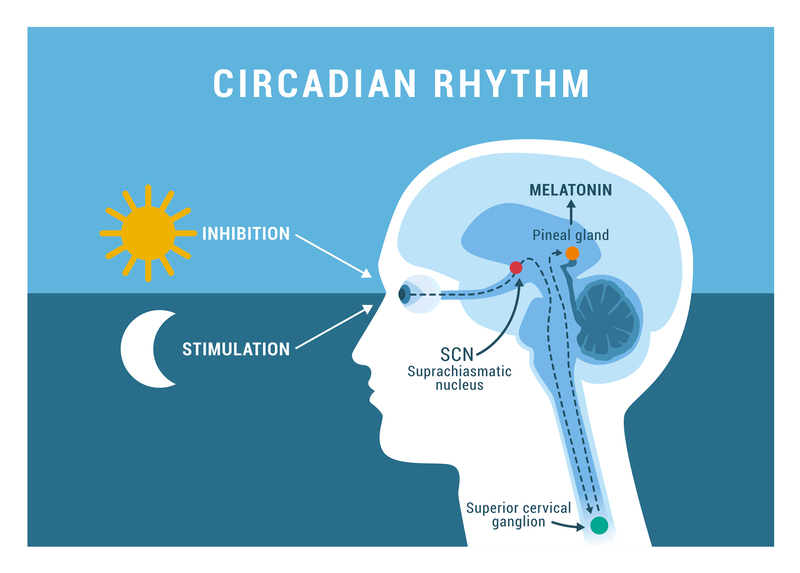
  • The internal process that regulates the sleep-wake cycle over 24 hours is called the Circadian rhythm and is triggered by light and darkness. Darkness will signal the brain to start the production of Melatonin in the pineal gland. Melatonin signals the brain that it’s time to sleep but it does not actually help with falling asleep or staying asleep. Other mechanisms in the brain and body initiate sleep. Long exposure to artificial light especially blue light waves can delay the Melatonin production.
  • The second body system that regulates sleep is the sleep/wake drive. The longer we are awake, we will create a need and desire to sleep. You probably can think back to a really active day in your life when you went for a long hike or did physical work and you fell asleep very easily at night.

dreamstime_s_184356459

My personal journey to better sleep

Before I delved into a more theoretical study of sleep by completing a Neuroscience study course in 2018, I tried many different approaches. I started with using a sleep tracker app that summarised my sleep pattern and apart from the apps not being very accurate, it was not helpful for me. The more information I had, the more I focused on a bad night’s sleep and stressed about it.

I had to look at my habits and my “sleep hygiene”. I reduced the number of coffees and had only decaf coffee for a few months. When I started to drink coffee again, I only had one cup early in the morning and never after midday. This small change made a big difference for me but I also had to look at some other areas of my work life balance.  I signed up for painting classes to take my mind off work, I tried to walk at least 10,000 steps every day and cut back on long work days to improve my work life balance. Finding my way back to better sleep was a very personal journey. After I left my corporate job 3 years ago, I took time off to travel and study. Apart from my ongoing studies of Yoga and Meditation, I completed a course in Applied Neuroscience and Brain Health in 2018.

Here are my 10 favourite tips for better sleep:

  1. Avoid caffeinated drinks late in the afternoon. Avoid alcohol and heavy meals before sleep. Alcohol makes us sleepy but it is a sedative that does not induce a normal sleep cycle.
  2. Switch off screens two hours before sleep and read a book instead. Replace blue light sources with softer yellow light.
  3. Only go to bed when you are tired and try to go to bed and wake up at the same time even on the weekends.
  4. Remove clocks from your bedroom and avoid checking the time when waking up during the night as this can cause additional stress.
  5. Make your bedroom a cool, calm and relaxing space. Invest in a good mattress and pillow.
  6. Take a warm shower or bath before bedtime. Our body temperature needs to cool down to signal our brain that we are ready to sleep. If you are not allergic, try using a few drops of lavender essential oil in the bedroom or use in a shower-gel or lotion. It’s been known for its calming and soothing effects.
  7. Often our busy brains keep us awake and we tend to “rehearse” the events of the following day. Try disrupting the stream of thought with simple techniques, e.g. thinking of unrelated words starting with a certain letter when you lie awake in bed. This technique is called “cognitive shuffle”, there are also Apps and Podcasts that can help with the task. Check out the list of resources below.
  8. Regular exercise and a healthy diet help with overall health and sleep quality.
  9. Practice yoga, meditation and other relaxation techniques, e.g. progressive muscle relaxation, body scan meditation, breathing techniques, restorative yoga.
  10. Lastly, there is a lot of research and good results from CBT (Cognitive Behavioural Therapy) related to sleep. Please note that I’m not a medical expert, check with your health professional to rule out any other causes if you are suffering from insomnia.

You can probably tell that I’m really passionate about sleep and health topics! Thank you for reading this blog. Please make sure to subscribe to the Life Balance Project newsletter on the website to be the first to learn about part 2 of my sleep blog and my meditation and yoga classes. In part 2 of the blog I’ll talk more about the sleep cycles, dreaming and what you can do if you are a young parent or shift-worker.

Also I added heaps links and resources below for you to check out. Enjoy and happy snoozing 🙂
Yours, Sandra

dreamstime_xs_10094886
Videos:

  1. SBS Insight Episode on Sleep Hacks
  2.  Neuroscientist Dr. Sarah McKay on the Neurobiology of napping  Indulge in Your Neurobiology
  3. Life Balance Project: Guided Body Scan Meditation

Books:
1. Matthew Walker: Why We Sleep
2. Guy Leschziner: The Nocturnal Brain

Cognitive Shuffle Tools:
1. Sleep with Me Podcast
2. My Sleep Button App

Other resources:
https://www.sleepfoundation.org/sleep-solutions/sleep-tools-tips


Vegan Salted Caramel Nice Cream

Dear friends,

I haven’t posted many recipes here. My website and social media posts are all about yoga, wellbeing, happiness and every time I make a healthy yummy treat I feel that I MUST share it with you. No surprise it’s another salted caramel flavour and yes, I’m addicted and 3 out of 3 recipes here have a salted caramel component in it 😉

Another obvious reason to share the salted caramel nice cream recipe is that it is summer in Australia and I love gelato. However, most gelato and certainly supermarket ice creams are very high in sugar, especially the salted caramel flavours. So here is a healthy, vegan, sugar free alternative for you. Try it and send me your feedback if you love it as much as I do. Ah….and it’s super easy and cheap to make too.

lifebalanceproject_saltedcaramel_vegan_nicecream

Ingredients:

  • 2 frozen bananas (cut into pieces and freeze over night)
  • 1 tbsp tahini
  • 1/2 cup of nut milk (I use home made almond milk)
  • 1/2 tsp cinnamon powder
  • 1 pinch of salt
  • Vanilla extract

Put all the ingredients in a high speed blender (I’ve been using my Optimum 9400 blender for many years) or sometimes use a powerful stick blender (needs to be at least 400W, I use Russell Hobbs)

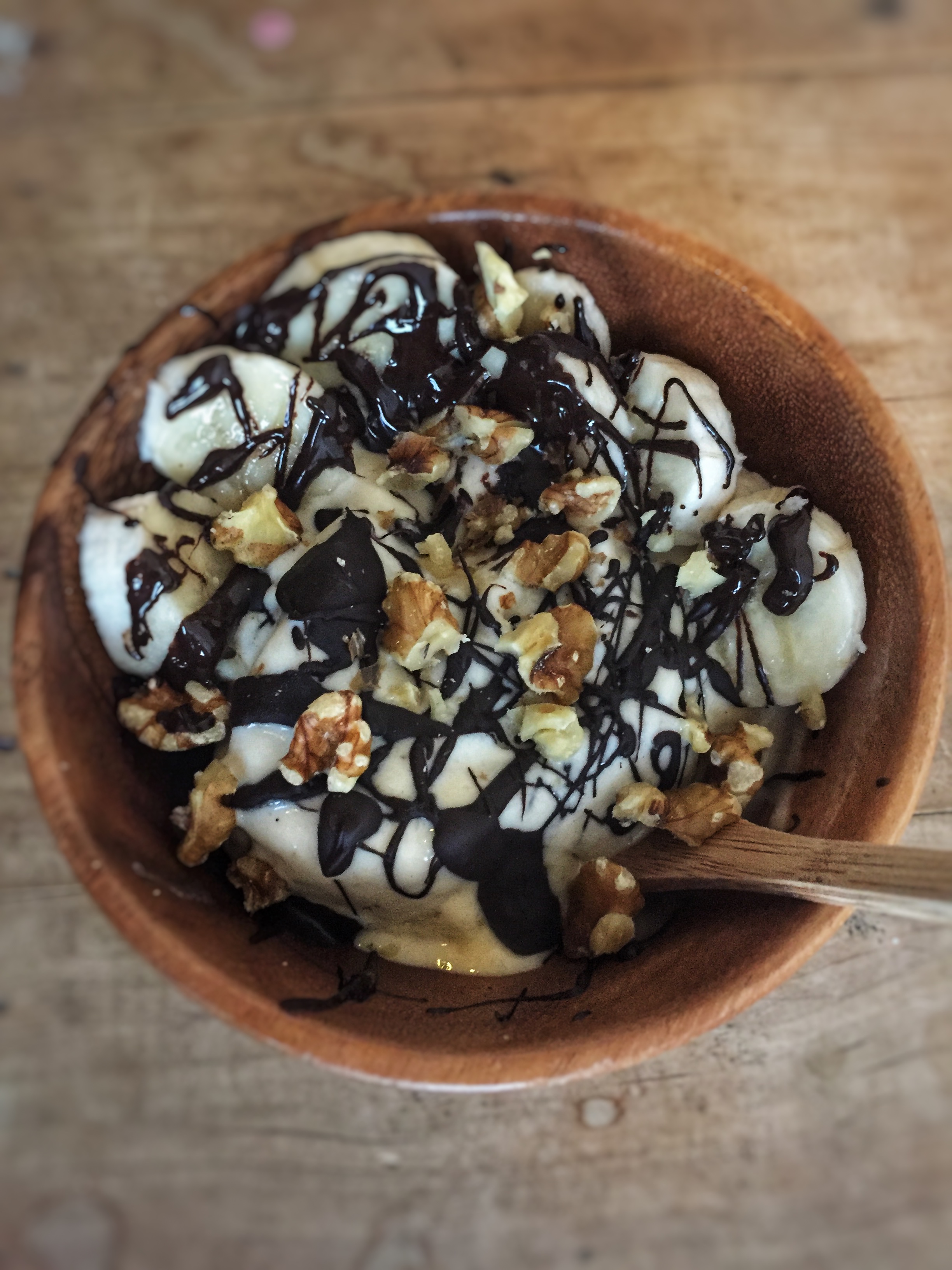
Blend until smooth, creamy and thick and add toppings to your liking and serve immediately. I added walnuts, banana slices and drizzled melted good quality vegan  dark chocolate over it. What’s not to love?

Tip: I use frozen bananas as a basis for my nice creams, instead of the salted caramel version, you can add fruit to the bananas, e.g. mango. I also tried  avocado nice cream once… stay tuned I’ll share the recipe soon.

Enjoy and stay healthy & happy and do more yoga 😉

Sandra ❤


Salted Caramel Bliss Balls

bliss balls

Salted caramel is probably one of my favourite flavours but I wanted to create a healthy snack and started to experiment. I found that the combination of dates and tahini create just the flavour I like, so here it is: I’m sharing my vegan and sugar-free recipe with you, no nasties but all the pleasure and taste.

You’ll need:

  • 1.5 cups of cashew nuts
  • 12  Medjool dates. You can can also use dried dates but you have to soak them in warm water for 2 hours. I find the taste is not quite as nice as Medjool dates, they have a nice caramel taste and are really soft.
  • 2 tbsp Tahini
  • Vanilla extract
  • 1/2 tsp Cinnamon
  • 1/2 tsp of sea salt
  • (Optional 1/2 scoop of protein powder- about 20g)
  • 1 cup shredded  coconut
  1. Chop the dates on a chopping board.
  2. Place cashew nuts in a food processor and pulse until finely chopped, add the dates and mix with the nuts first, then add tahini, vanilla, cinnamon and salt (optional to add protein powder).
  3. Process everything well in the food processor until it becomes a  smooth, sticky dough, if the dough is too dry, you can add another 1 or 2 dates, a bit of water or a tbsp of coconut oil.
  4. Transfer into a bowl and mix through with a spoon or using your hands.
  5. Portion the dough with a small spoon and roll into balls with your hands.
  6. Transfer into a bowl with shredded coconut and coat the bliss balls in coconut.

Recipe makes about 15 bliss balls. Keep them in an airtight container in the fridge, they keep for about a week (not in my household 😉  Enjoy!

Almond Butter and Smoothie Recipe

Hello guys,

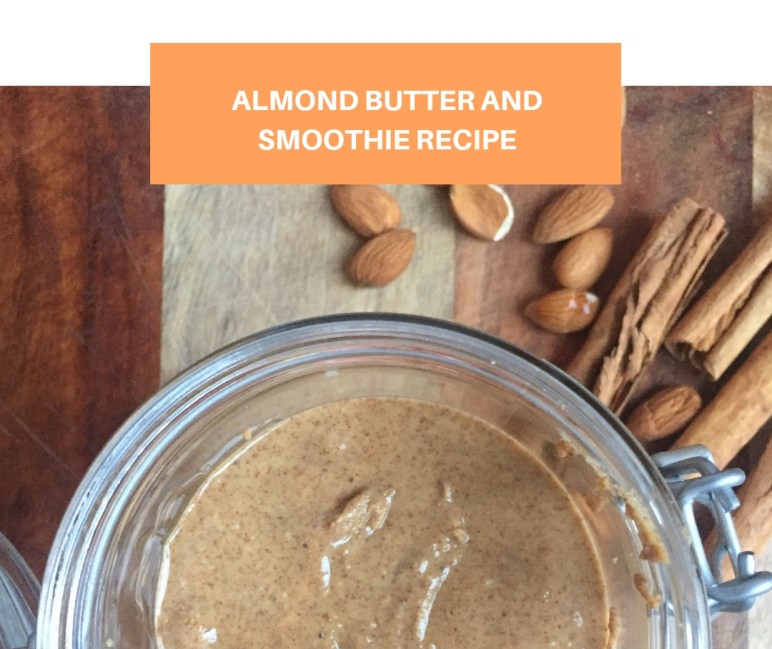
Today, I want to share one of my favourite recipes: Almond butter is quick and easy to make and a very versatile healthy snack. Almonds contain lots of healthy fats, protein, magnesium, vitamin E and fibre but most of all this vegan recipe it’s super yummy! Scroll down for the details and enjoy…

almondbutter

Here’s what you need:

  • A high-speed blender (I use an Optimum blender)
  • 2 cups of dry roasted almonds
  • 1 banana
  • Protein powder of your choice
  • 2 cups of almond milk (or other vegan milk of your choice)
  • Half a tsp of cinnamon (or more if you you are addicted to cinnamon like me 🙂

Pour the almonds into your blender and pulse a few times before setting the blender on the highest speed.  I buy dry roasted almonds but you can also roast natural almonds in the oven, let them cool and then start your almond butter. If you use natural almonds you have to add some oil to the mixture. I personally prefer the dry roasted almonds. It gives the almond butter a very rich and toasty flavour.

Blending your almonds, they will pulverise first and then release their oil after a couple of minutes (time depends on the strength of your blender). It should take about 4 minutes. Use the tamper of your blender to push the mix down a few times.

The almond butter is ready when it has an even, creamy consistency but still has some crunchy almond bits in it. If you like it creamier, blend until it’s got your preferred consistency.

I use a silicon scraper to transfer the nut butter into an airtight container. Although the silicon scraper gets the sticky nut butter out of the bottom of the blender quite well, I have my own trick to not waste any of the delicious butter. This is my favourite part of the process:  Once I have about a tablespoon of butter left in the blender, I make a delicious vegan smoothie by simply adding one banana, 2 cups of nut milk, a scoop of protein powder and a tsp. of cinnamon. So good!

Almond butter is a great alternative to peanut butter and there is no sugar, salt or other oils added in this recipe. My favourite afternoon snack is spreading almond butter on apple slices and sprinkle over cinnamon – lots of cinnamon of course 🙂

The almond butter keeps very well, you don’t have to keep it in the fridge because of its high fat content. But trust me, it tastes so good that you don’t have to worry how long it keeps in the pantry 😉 Enjoy ❤