by Sandra Sperber

“In a world where you can be anything, be kind” (unknown)
Thank you for being here!
I recently completed a fundraiser challenge of spreading kindness and positivity for 20 days, and noticed so many benefits for myself and others. Being kind can change how you see the world and relate to others, and that often takes courage. For example, speaking up when someone gets bullied, wearing a mask during the pandemic or letting someone merge into your lane when you are in a hurry. Often we are just too busy and not present enough to notice when someone needs our help.
Here’s the thing: as humans we are wired to be empathetic and kind, to connect with other humans. But did you ever go to a job interview and mentioned ‘being kind’ as one of your strengths? I didn’t. Instead, I said that I’m a driven, reliable, open-minded person etc. etc. While I am all those things too, being a sensitive and kind person was something I chose to hide as well as I could.
There seemed to be only downsides, and even as a kid I wasn’t encouraged to be kind. Sensitivity and kindness were often labelled as a weakness and I was warned that people would take advantage of me. As a result, I struggled to open up and be seen, and constantly mistrusted people while trying to please everyone. It took time to eventually change my attitude about being kind. Kindness is not a transactional thing and it’s not about pleasing anyone or getting anything in return.
So this month, when the opportunity came along to do a 20-day challenge fundraiser with a friend, I didn’t think twice about the motto we would chose:
We committed to 20 days of spreading kindness and positivity.
At the beginning, we barely came up with 3 things we could do but once we got started, we had more and more ideas of what we could do. Here are some examples:
– Beach clean ups
– Giving away free books
– Donating business outfits for “Dress for Success“
– Knitting for a charity “Wrap with Love“
– Cooking and baking for others,
– Buying coffees for strangers,
– Supporting freelance musicians,
– Teaching free meditation classes (read more about meditation in my previous blog post and book in a free session here)
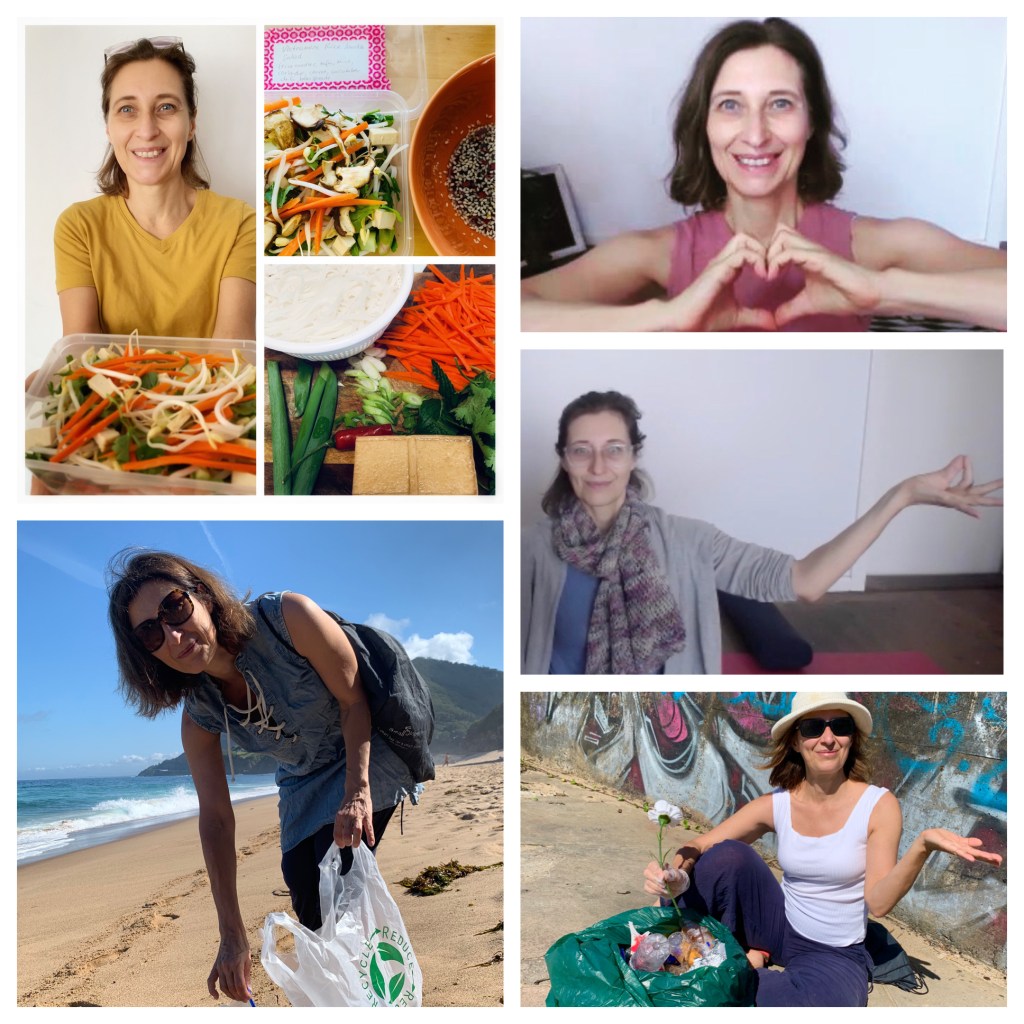
We received so many message from people that looked forward to our posts about our acts of kindness. It made not only us and the people who received our acts of kindness happier, but also the people who saw the photos on social media.
Why being kind benefits you and others:
1. Being kind releases ‘feel good‘ chemicals:
Neurochemicals like oxytocin, serotonin and endorphins are released in the person that is acting kindly and in the person that is receiving the act of kindness. This cultivates positive emotions such as happiness, contentment, peacefulness, and compassion. It relieves stress and activates the
parasympathetic nervous system which is great for our mental and overall health.
“Positive emotions are the building blocks of resilience, physical health, everyday effectiveness, and fulfilling relationships. We need moments of positivity. Because those moments nourish growth, and they nourish learning.”
Barbara Fredrickson
2. Creating social connection:
Acts of kindness create connections. Humans have a fundamental need for connection. Based on our evolution as humans, being part of a community for farming, hunting and protection was critical for our survival.
3. Kindness is contagious:
As humans we respond to other people’s emotions as empathy. Empathy is the ability to sense other people’s emotions, and to imagine what someone else is experiencing. There are several theories why we pick up on other people’s feelings: Some scientists say that so-called mirror neurons in the brain are responsible for this connection. This is just one explanation that was derived from tests with primates but has not been scientifically proven in humans.
4. A Sense of purpose:
In our modern lives finding something that we have control over and that is giving us a sense of purpose can often be difficult. Simple acts of kindness can give us a sense of contribution to something bigger outside of ourselves. During our challenge we tried to add acts of kindness towards people with different backgrounds but also towards ourselves and the environment.
5. The bigger picture
For most of our lives we have been taught to follow our dreams and goals and our actions have mainly become a reflection for self-realisation and self-fulfilment. I found that the recent debate about wearing masks during the pandemic was a perfect example of this. The masks are mainly protecting other people. It was sad to see that so many people place their own interest in the centre of their actions and empathy is often not extended beyond a small family or peer group. During a pandemic it takes more than kindness to protect the community. Deeply caring for everyone requires compassion which is an unconditional caring that goes beyond the people that are close to us. Compassion is at the centre of Buddhist teaching and is about witnessing and holding space for others who are suffering.
“All joy in the world comes from wanting others to be happy, and all suffering in this world comes from wanting only oneself to be happy.” Shantideva
At the end of our 20 days, we raised over $2,000 for children in developing countries and we felt very proud. We had so much fun coming up with ideas and we’ll continue to add more acts of kindness to our lives beyond the fundraiser.
Thanks for taking the time to read my blog. Please share with anyone who needs a dose of kindness, subscribe to my newsletter and connect with me on social media. I’d love to hear from you how kindness and compassion affected your life in some way.
Lots of love,
Sandra
 Life Balance Project