Why Being Kind Benefits You and Others: My 20-Day Challenge of Spreading Kindness and Positivity

by Sandra Sperber

“In a world where you can be anything, be kind” (unknown)

Thank you for being here!

I recently completed a fundraiser challenge of spreading kindness and positivity for 20 days, and noticed so many benefits for myself and others. Being kind can change how you see the world and relate to others, and that often takes courage. For example, speaking up when someone gets bullied, wearing a mask during the pandemic or letting someone merge into your lane when you are in a hurry. Often we are just too busy and not present enough to notice when someone needs our help.

Here’s the thing: as humans we are wired to be empathetic and kind, to connect with other humans. But did you ever go to a job interview and mentioned ‘being kind’ as one of your strengths? I didn’t. Instead, I said that I’m a driven, reliable, open-minded person etc. etc. While I am all those things too, being a sensitive and kind person was something I chose to hide as well as I could.

There seemed to be only downsides, and even as a kid I wasn’t encouraged to be kind. Sensitivity and kindness were often labelled as a weakness and I was warned that people would take advantage of me. As a result, I struggled to open up and be seen, and constantly mistrusted people while trying to please everyone. It took time to eventually change my attitude about being kind. Kindness is not a transactional thing and it’s not about pleasing anyone or getting anything in return.

So this month, when the opportunity came along to do a 20-day challenge fundraiser with a friend, I didn’t think twice about the motto we would chose:

We committed to 20 days of spreading kindness and positivity.

At the beginning, we barely came up with 3 things we could do but once we got started, we had more and more ideas of what we could do. Here are some examples:

– Beach clean ups
– Giving away free books
– Donating business outfits for “Dress for Success
– Knitting for a charity “Wrap with Love
– Cooking and baking for others,
– Buying coffees for strangers,
– Supporting freelance musicians,
– Teaching free meditation classes (read more about meditation in my previous blog post and book in a free session here)
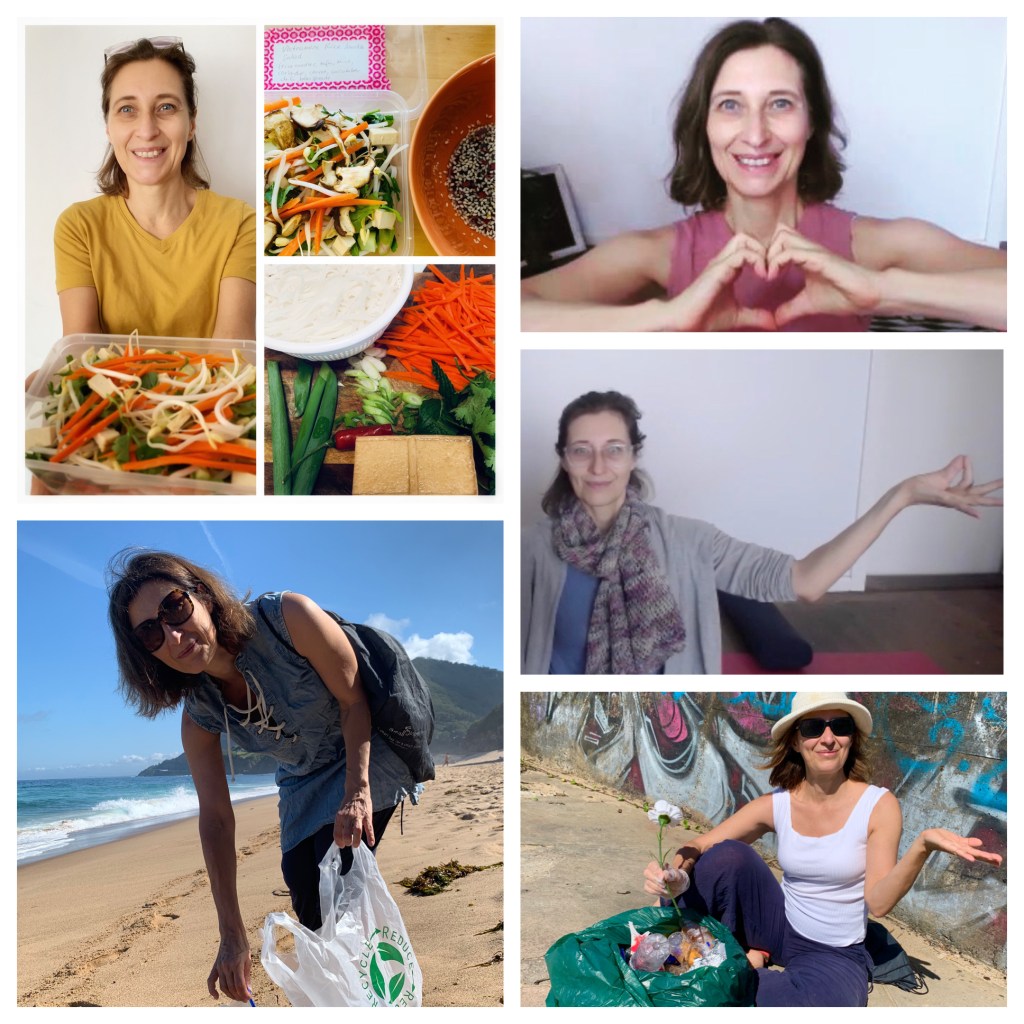
We received so many message from people that looked forward to our posts about our acts of kindness. It made not only us and the people who received our acts of kindness happier, but also the people who saw the photos on social media.

Why being kind benefits you and others:

1. Being kind releases ‘feel good chemicals:
Neurochemicals like oxytocin, serotonin and endorphins are released in the person that is acting kindly and in the person that is receiving the act of kindness. This cultivates positive emotions such as happiness, contentment, peacefulness, and compassion. It relieves stress and activates the
parasympathetic nervous system which is great for our mental and overall health.

“Positive emotions are the building blocks of resilience, physical health, everyday effectiveness, and fulfilling relationships. We need moments of positivity. Because those moments nourish growth, and they nourish learning.”

Barbara Fredrickson

2. Creating social connection:
Acts of kindness create connections. Humans have a fundamental need for connection. Based on our evolution as humans, being part of a community for farming, hunting and protection was critical for our survival.

3. Kindness is contagious:
As humans we respond to other people’s emotions as empathy. Empathy is the ability to sense other people’s emotions, and to imagine what someone else is experiencing. There are several theories why we pick up on other people’s feelings: Some scientists say that so-called mirror neurons in the brain are responsible for this connection. This is just one explanation that was derived from tests with primates but has not been scientifically proven in humans.

4. A Sense of purpose:
In our modern lives finding something that we have control over and that is giving us a sense of purpose can often be difficult. Simple acts of kindness can give us a sense of contribution to something bigger outside of ourselves. During our challenge we tried to add acts of kindness towards people with different backgrounds but also towards ourselves and the environment.

5. The bigger picture
For most of our lives we have been taught to follow our dreams and goals and our actions have mainly become a reflection for self-realisation and self-fulfilment. I found that the recent debate about wearing masks during the pandemic was a perfect example of this. The masks are mainly protecting other people. It was sad to see that so many people place their own interest in the centre of their actions and empathy is often not extended beyond a small family or peer group. During a pandemic it takes more than kindness to protect the community. Deeply caring for everyone requires compassion which is an unconditional caring that goes beyond the people that are close to us. Compassion is at the centre of Buddhist teaching and is about witnessing and holding space for others who are suffering.

“All joy in the world comes from wanting others to be happy, and all suffering in this world comes from wanting only oneself to be happy.” Shantideva


At the end of our 20 days, we raised over $2,000 for children in developing countries and we felt very proud. We had so much fun coming up with ideas and we’ll continue to add more acts of kindness to our lives beyond the fundraiser.


Thanks for taking the time to read my blog. Please share with anyone who needs a dose of kindness, subscribe to my newsletter and connect with me on social media. I’d love to hear from you how kindness and compassion affected your life in some way.

Lots of love,
Sandra
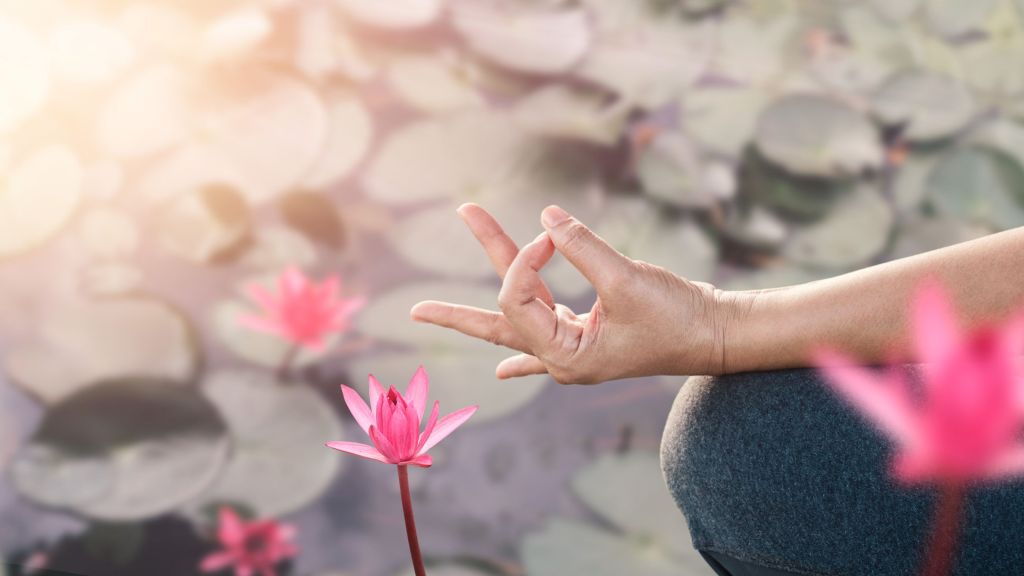
10 Things I Wish I Knew Before I Started to Practice Meditation

by Sandra Sperber

In 2014, I attended a silent retreat surrounded by nature in a national park. I had a wonderful time and felt peaceful, happy and relaxed afterwards but this is not at all how my experience with meditation began 25 years ago. Back then, I signed up for a meditation course and all I remember is that my back was hurting from sitting cross-legged on the floor. 

After my first course, I kept up my meditation practice for a long time, the back pain improved but somehow life got in the way and I stopped. The problem was that there were too many rules on when to meditate, how to sit, where to sit and what stopped me was that I focussed on the obstacles: being too busy, not having the perfect space, etc. After many more meditation courses and teacher trainings, my passion as a teacher is to make meditation accessible and enjoyable.

Since my first meditation course from way back, I learned from many different teachers and schools of meditation. Here is what I wish I knew before I started:

1. Meditation and mindfulness are not self-help tools

It’s not about becoming a different person or better person. There is so much in the media at the moment on how mindfulness can help to manage stress and improve sleep. Putting meditation and mindfulness on your to do list as another “thing” to do can often add to the stress and frustration. There are many other ways to approach your path to well-being. In my meditation courses I introduce participants to different tools and techniques including relaxation and breathing techniques as well as sound.

“Meditation is the only intentional, systematic human activity which at bottom is about not trying to improve yourself or get anywhere else, but simply realize where you already are.” Jon Kabat-Zinn

2. Mindfulness and meditation are not the same 

Mindfulness and meditation are often used in the same context. They are related but not the same. A mindfulness practice focuses on bringing the attention to the present moment, using the senses to notice certain details like sounds, smells, taste, etc. We can become present in any moment during the day and interrupt when we are not fully paying attention to whatever we are doing or our surroundings. When we practice meditation, we are setting aside a dedicated time for stillness. We are using the skills of mindfulness to bring the attention to a single focus and connect with a deeper part of ourselves. 

“Mindfulness involves the skillful use of attention to both your inner and outer worlds”  Rick Hanson

3. You can sit in a comfortable position

Relaxation is an important part of meditation. When the body becomes still and relaxed, the mind can relax. Sitting in pain is will keep your attention on the pain. You can sit on a chair, a cushion, lean against the wall or meditate lying down if this is the most comfortable position for you.

4.  You don’t have to meditate with your eyes closed

There are meditation techniques where you don’t have to close your eyes (for example softly gazing at a candle for object in front of you). Personally, I like to close my eyes during meditation because it helps me to draw my attention inward.

5. Thoughts are not the enemy of meditation

You don’t have to empty your mind. We are not trying to turn off our thoughts and emotions. However, thinking is what our minds are supposed to do and meditation gives us an opportunity to pause and become aware of our thoughts and emotions without judgement.

6. Be kind to yourself

Listen to your body. Whatever practice you are doing, be kind to yourself and start your practice with small steps. When I worked in corporate and came home in the evening, I jumped straight to my to do list of household chores, paperwork and preparing dinner. Simply taking the time to sit down for 10 minutes with a cup of tea every day became a practice that I was able to commit to.

7. Meditation is not only for the early risers

Many clients tell me that they have difficulties to meditate in the morning. It is very common that we go straight to action mode in the mornings and there is simply not enough time or mental space to meditate. Try to practice at different times during the day and see what happens and what works best for you.  

I often adapt my meditation practice as I’m not early bird but I’m not a night owl either. I’m somewhere in between and therefore work around my personal body clock.  

(If you are unsure about your “chronotype” you can take a test here.)

8. Meditation really works

Research suggests that meditation can induce an overall sense of well-being. A consistent practice will change the neural pathways in the brain and can improve concentration, create equanimity, a more positive outlook on life and compassion towards ourselves and others. The positive effects show not just during or immediately after we meditate, but in all areas of our daily lives.  

9. Meditation is a part of yoga

Meditation is part of yoga, an ancient and system which means to “unite” and to balance the body and the mind.  In the Western world, we tend to separate the physical part of yoga from the mental and spiritual practice. In my courses, I refer to the different parts of Yoga (Patanjali’s eight-fold path of yoga) and how meditation fits into the bigger picture.

10. Keep it simple

Some days it’s enough to take 3 deep conscious breaths. 

So my advice is to approach mindfulness and meditation with an open and curious mind and to try different techniques. Make meditation a daily habit. The right practice for you is the one you do. It’s better to start somewhere than not at all. 

Is 2020 Stressing You Out?

Welcome to July! It’s hard to believe that we are already halfway through 2020. Do you also feel like this year is really testing the limits of how well we are coping with change, uncertainty, stress and how well we are attuned to our emotional landscape through all of this? In this blog I’ll share my personal half-year check-in and we’ll look into the nature of stress and how to build resilience.

In Australia, we experienced a devastating bushfire season at the end of 2019 and into January 2020. I live in a rural area in the middle of a national park and after spending most of my life in Europe, I have never experienced bushfires before and had to learn how to prepare for this danger to my physical safety. We had several months with a weather pattern that exposed us to one or two days of extreme fire danger every week with over 40 degrees and strong winds. On the news, they were showing how quickly and unpredictable the fires were spreading in coastal communities just like the one where I live. I slept very lightly, was always on alert and woke up at night to the smell of fire and smoke in the air. The smoke and embers traveled over long distances forcing me to stay inside to avoid the effects of the smoke burning in my eyes and lungs. I wore a face mask when I had to go out. This all feels like this was ages ago now.

Soon after the bushfire emergency, the world was thrown into a global pandemic. Apart from the potential risk to our own physical health and the health of vulnerable members of the community, for many people the COVID-19 pandemic comes with financial uncertainty, isolation, loneliness, separation from family & friends, and missing out on regular lifestyle routines like going to concerts, theatres and restaurants etc. 

So, how can we navigate these unprecedented, uncertain times? 

Firstly, let’s take a closer look at the nature of stress and what it does to our body and brain.

There are two different categories of perceived stress:

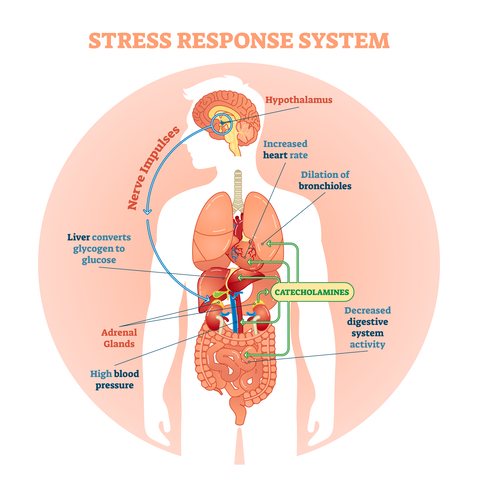
  1. Physical stress can be due to accidents, blood loss, natural disasters and will trigger a fast response to an acute danger that will trigger the release hormones like cortisol and adrenalin. Our heart rate goes up, digestion slows down, more blood flows to the muscles to prepare us for a “fight or flight” response and the liver will increase the production of glucose to get the body energy to act. The body quickly goes back to baseline once the physical stress is over. 
  2. Psychological stress such as work deadlines, social rejection, loneliness, negative thoughts, perceived failure etc. trigger a slower and longer lasting stress response that can easily turn into chronic stress, where our body does not easily get back to baseline resulting in high cortisol levels for some individuals or fatigue and a lack of cortisol at the other end of the spectrum. 

As individuals we all have a very different threshold to stress based on our life experience, memories and genetic predisposition. We are particularly vulnerable to stress at different points in our lives, especially during periods of massive change and sudden transition. I’m sure 2020 qualifies for both massive and sudden changes for many people. Chronic stress can lead to a range of health issues, e.g. depression, short-term forgetfulness, cognitive decline and a higher risk of Alzheimers disease.

It’s important to note that not all stress is bad for us. A certain amount of stress and tension is good for us to achieve goals and learn new skills through personal challenge. (TED talk for reference). We don’t have control over many of the triggers for stress (stressors) but we can learn how to deal better with stressful events, become more resilient and turn adversity into advantage:

Here are some tips how to build resilience:

  • Exercise, 
  • Social support network
  • Self-care and self-compassion
  • Managing emotional response (e.g. journalling)
  • Creating a sense of purpose and autonomy 
  • Create a positive mindset & thoughts
  • Mindfulness, meditation & relaxation

And in the words of Banksy’s latest artwork on the London tube:
“I get lockdown, but I get up again” (Banksy on YouTube)

For those interested in how we can use meditation techniques to counter stress and build resilience I invite you to check out my 5-Week Meditation Intensive starting Monday July 20th at 6:30pm (Sydney time).

Meditation and mindfulness are powerful tools that help me navigate these unprecedented and challenging times.

Book Your Spot here

I started my meditation journey more than 20 years ago and practiced a variety of meditation and mindfulness techniques. I developed a deep knowledge and understanding of the benefits of meditation including the latest neuroscience research and I’m very excited to share this 5-Week Meditation Intensive online course with you for the first time. All sessions will be live and you can access the recordings via a private Facebook Group.

Take care and carry on, carrying on!

Lots of love,
Sandra

Let’s Talk About Sleep! 10 Ways to Improve your Sleep

Anika's Baby Shower (3)

Let’s Talk About Sleep – Part 1
The science and benefits of sleep, and 10 ways to improve your sleep

by Sandra Sperber

The following blog is my personal journey, not medical advice. If you are suffering from insomnia or restless leg syndrome, contact a health professional to rule out any other underlying health issue that may affect your sleep.

Sleep is one of my favourite topics but only a few years ago, I only slept 6 hours at night, worked long hours in the office and travelled a lot along with regular jet-lags. I only got through my day with several coffees and sugary treats in the afternoon when coffee just did not get me through the long work days. I felt depleted on the weekends and tried to catch up on sleep that I missed out on during the week. What I did not know back then was that it is not really possible to make up for sleep.

Today, I’m getting 8 hours of sleep relatively consistently every night. My journey to get more and better sleep started when I read Adriana Huffington’s book “Thrive” and how she made sleep her top priority. The book really inspired me to prioritise my own sleep by creating boundaries and taking more self-care. It also inspired me to learn more about why we sleep and how much sleep we really need.

In our busy lifestyles sleep is often undervalued, labelled as laziness or a waste of time, so hopefully I can convince you that sleep can be your super-power.  But first, let’s look into the sleep science:

So, why do we sleep?
Sleep makes up approximately one third of our lives and all living organisms on the planet, no matter how small, sleep. Sleep is the foundation of our overall physical, mental and emotional health and it’s vital for our brain health.

Nothing will affect your wellbeing as quickly as missing out on just one night of sleep. The short-term effects commonly range from brain fog, slower reaction times and a difficulty in concentration. To give you more reasons to continue reading, chronic insomnia can lead to high blood pressure, diabetes, reduced function of the immune system, memory loss and depression.

During sleep our brains are not inactive or resting. On the contrary, sleep is a highly organised state coordinated by the brain, body, environment and behaviour:

  • When we sleep our brains are consolidating, optimising and sorting through external and internal stimuli and information from our day. Sleep is an important component of memory and learning.
  • Only in recent years scientists discovered the Glymphatic system in the body which removes metabolic waste such as toxic proteins from the brain. It’s like a detox that is happening when we sleep and these proteins are linked to an increased risk of developing Dementia and Alzheimers disease.
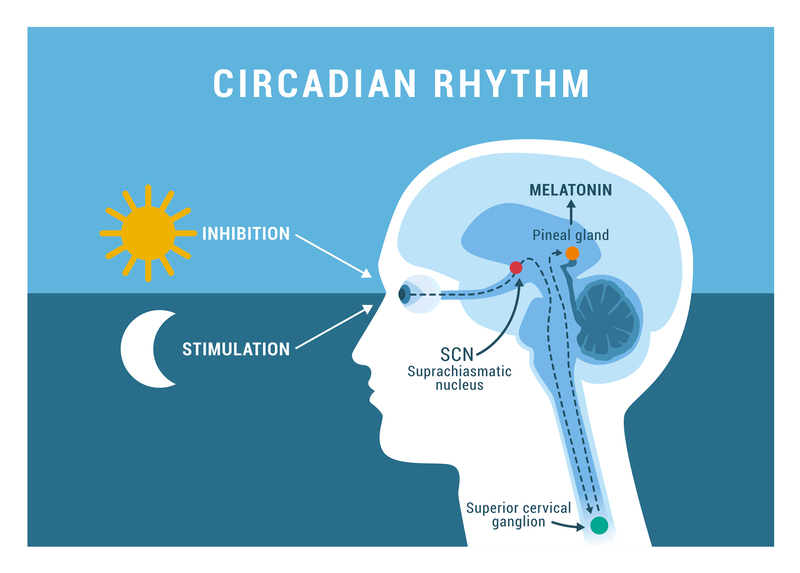
  • The internal process that regulates the sleep-wake cycle over 24 hours is called the Circadian rhythm and is triggered by light and darkness. Darkness will signal the brain to start the production of Melatonin in the pineal gland. Melatonin signals the brain that it’s time to sleep but it does not actually help with falling asleep or staying asleep. Other mechanisms in the brain and body initiate sleep. Long exposure to artificial light especially blue light waves can delay the Melatonin production.
  • The second body system that regulates sleep is the sleep/wake drive. The longer we are awake, we will create a need and desire to sleep. You probably can think back to a really active day in your life when you went for a long hike or did physical work and you fell asleep very easily at night.

dreamstime_s_184356459

My personal journey to better sleep

Before I delved into a more theoretical study of sleep by completing a Neuroscience study course in 2018, I tried many different approaches. I started with using a sleep tracker app that summarised my sleep pattern and apart from the apps not being very accurate, it was not helpful for me. The more information I had, the more I focused on a bad night’s sleep and stressed about it.

I had to look at my habits and my “sleep hygiene”. I reduced the number of coffees and had only decaf coffee for a few months. When I started to drink coffee again, I only had one cup early in the morning and never after midday. This small change made a big difference for me but I also had to look at some other areas of my work life balance.  I signed up for painting classes to take my mind off work, I tried to walk at least 10,000 steps every day and cut back on long work days to improve my work life balance. Finding my way back to better sleep was a very personal journey. After I left my corporate job 3 years ago, I took time off to travel and study. Apart from my ongoing studies of Yoga and Meditation, I completed a course in Applied Neuroscience and Brain Health in 2018.

Here are my 10 favourite tips for better sleep:

  1. Avoid caffeinated drinks late in the afternoon. Avoid alcohol and heavy meals before sleep. Alcohol makes us sleepy but it is a sedative that does not induce a normal sleep cycle.
  2. Switch off screens two hours before sleep and read a book instead. Replace blue light sources with softer yellow light.
  3. Only go to bed when you are tired and try to go to bed and wake up at the same time even on the weekends.
  4. Remove clocks from your bedroom and avoid checking the time when waking up during the night as this can cause additional stress.
  5. Make your bedroom a cool, calm and relaxing space. Invest in a good mattress and pillow.
  6. Take a warm shower or bath before bedtime. Our body temperature needs to cool down to signal our brain that we are ready to sleep. If you are not allergic, try using a few drops of lavender essential oil in the bedroom or use in a shower-gel or lotion. It’s been known for its calming and soothing effects.
  7. Often our busy brains keep us awake and we tend to “rehearse” the events of the following day. Try disrupting the stream of thought with simple techniques, e.g. thinking of unrelated words starting with a certain letter when you lie awake in bed. This technique is called “cognitive shuffle”, there are also Apps and Podcasts that can help with the task. Check out the list of resources below.
  8. Regular exercise and a healthy diet help with overall health and sleep quality.
  9. Practice yoga, meditation and other relaxation techniques, e.g. progressive muscle relaxation, body scan meditation, breathing techniques, restorative yoga.
  10. Lastly, there is a lot of research and good results from CBT (Cognitive Behavioural Therapy) related to sleep. Please note that I’m not a medical expert, check with your health professional to rule out any other causes if you are suffering from insomnia.

You can probably tell that I’m really passionate about sleep and health topics! Thank you for reading this blog. Please make sure to subscribe to the Life Balance Project newsletter on the website to be the first to learn about part 2 of my sleep blog and my meditation and yoga classes. In part 2 of the blog I’ll talk more about the sleep cycles, dreaming and what you can do if you are a young parent or shift-worker.

Also I added heaps links and resources below for you to check out. Enjoy and happy snoozing 🙂
Yours, Sandra

dreamstime_xs_10094886
Videos:

  1. SBS Insight Episode on Sleep Hacks
  2.  Neuroscientist Dr. Sarah McKay on the Neurobiology of napping  Indulge in Your Neurobiology
  3. Life Balance Project: Guided Body Scan Meditation

Books:
1. Matthew Walker: Why We Sleep
2. Guy Leschziner: The Nocturnal Brain

Cognitive Shuffle Tools:
1. Sleep with Me Podcast
2. My Sleep Button App

Other resources:
https://www.sleepfoundation.org/sleep-solutions/sleep-tools-tips