Let’s Talk About Sleep – Part 1
The science and benefits of sleep, and 10 ways to improve your sleep
by Sandra Sperber
The following blog is my personal journey, not medical advice. If you are suffering from insomnia or restless leg syndrome, contact a health professional to rule out any other underlying health issue that may affect your sleep.
Sleep is one of my favourite topics but only a few years ago, I only slept 6 hours at night, worked long hours in the office and travelled a lot along with regular jet-lags. I only got through my day with several coffees and sugary treats in the afternoon when coffee just did not get me through the long work days. I felt depleted on the weekends and tried to catch up on sleep that I missed out on during the week. What I did not know back then was that it is not really possible to make up for sleep.
Today, I’m getting 8 hours of sleep relatively consistently every night. My journey to get more and better sleep started when I read Adriana Huffington’s book “Thrive” and how she made sleep her top priority. The book really inspired me to prioritise my own sleep by creating boundaries and taking more self-care. It also inspired me to learn more about why we sleep and how much sleep we really need.
In our busy lifestyles sleep is often undervalued, labelled as laziness or a waste of time, so hopefully I can convince you that sleep can be your super-power. But first, let’s look into the sleep science:
So, why do we sleep?
Sleep makes up approximately one third of our lives and all living organisms on the planet, no matter how small, sleep. Sleep is the foundation of our overall physical, mental and emotional health and it’s vital for our brain health.
Nothing will affect your wellbeing as quickly as missing out on just one night of sleep. The short-term effects commonly range from brain fog, slower reaction times and a difficulty in concentration. To give you more reasons to continue reading, chronic insomnia can lead to high blood pressure, diabetes, reduced function of the immune system, memory loss and depression.
During sleep our brains are not inactive or resting. On the contrary, sleep is a highly organised state coordinated by the brain, body, environment and behaviour:
- When we sleep our brains are consolidating, optimising and sorting through external and internal stimuli and information from our day. Sleep is an important component of memory and learning.
- Only in recent years scientists discovered the Glymphatic system in the body which removes metabolic waste such as toxic proteins from the brain. It’s like a detox that is happening when we sleep and these proteins are linked to an increased risk of developing Dementia and Alzheimers disease.
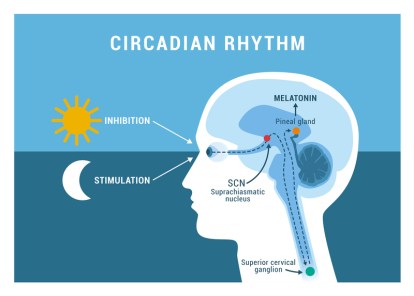
- The internal process that regulates the sleep-wake cycle over 24 hours is called the Circadian rhythm and is triggered by light and darkness. Darkness will signal the brain to start the production of Melatonin in the pineal gland. Melatonin signals the brain that it’s time to sleep but it does not actually help with falling asleep or staying asleep. Other mechanisms in the brain and body initiate sleep. Long exposure to artificial light especially blue light waves can delay the Melatonin production.
- The second body system that regulates sleep is the sleep/wake drive. The longer we are awake, we will create a need and desire to sleep. You probably can think back to a really active day in your life when you went for a long hike or did physical work and you fell asleep very easily at night.
My personal journey to better sleep
Before I delved into a more theoretical study of sleep by completing a Neuroscience study course in 2018, I tried many different approaches. I started with using a sleep tracker app that summarised my sleep pattern and apart from the apps not being very accurate, it was not helpful for me. The more information I had, the more I focused on a bad night’s sleep and stressed about it.
I had to look at my habits and my “sleep hygiene”. I reduced the number of coffees and had only decaf coffee for a few months. When I started to drink coffee again, I only had one cup early in the morning and never after midday. This small change made a big difference for me but I also had to look at some other areas of my work life balance. I signed up for painting classes to take my mind off work, I tried to walk at least 10,000 steps every day and cut back on long work days to improve my work life balance. Finding my way back to better sleep was a very personal journey. After I left my corporate job 3 years ago, I took time off to travel and study. Apart from my ongoing studies of Yoga and Meditation, I completed a course in Applied Neuroscience and Brain Health in 2018.
Here are my 10 favourite tips for better sleep:
- Avoid caffeinated drinks late in the afternoon. Avoid alcohol and heavy meals before sleep. Alcohol makes us sleepy but it is a sedative that does not induce a normal sleep cycle.
- Switch off screens two hours before sleep and read a book instead. Replace blue light sources with softer yellow light.
- Only go to bed when you are tired and try to go to bed and wake up at the same time even on the weekends.
- Remove clocks from your bedroom and avoid checking the time when waking up during the night as this can cause additional stress.
- Make your bedroom a cool, calm and relaxing space. Invest in a good mattress and pillow.
- Take a warm shower or bath before bedtime. Our body temperature needs to cool down to signal our brain that we are ready to sleep. If you are not allergic, try using a few drops of lavender essential oil in the bedroom or use in a shower-gel or lotion. It’s been known for its calming and soothing effects.
- Often our busy brains keep us awake and we tend to “rehearse” the events of the following day. Try disrupting the stream of thought with simple techniques, e.g. thinking of unrelated words starting with a certain letter when you lie awake in bed. This technique is called “cognitive shuffle”, there are also Apps and Podcasts that can help with the task. Check out the list of resources below.
- Regular exercise and a healthy diet help with overall health and sleep quality.
- Practice yoga, meditation and other relaxation techniques, e.g. progressive muscle relaxation, body scan meditation, breathing techniques, restorative yoga.
- Lastly, there is a lot of research and good results from CBT (Cognitive Behavioural Therapy) related to sleep. Please note that I’m not a medical expert, check with your health professional to rule out any other causes if you are suffering from insomnia.
You can probably tell that I’m really passionate about sleep and health topics! Thank you for reading this blog. Please make sure to subscribe to the Life Balance Project newsletter on the website to be the first to learn about part 2 of my sleep blog and my meditation and yoga classes. In part 2 of the blog I’ll talk more about the sleep cycles, dreaming and what you can do if you are a young parent or shift-worker.
Also I added heaps links and resources below for you to check out. Enjoy and happy snoozing 🙂
Yours, Sandra

Videos:
- SBS Insight Episode on Sleep Hacks
- Neuroscientist Dr. Sarah McKay on the Neurobiology of napping Indulge in Your Neurobiology
- Life Balance Project: Guided Body Scan Meditation
Books:
1. Matthew Walker: Why We Sleep
2. Guy Leschziner: The Nocturnal Brain
Cognitive Shuffle Tools:
1. Sleep with Me Podcast
2. My Sleep Button App
Other resources:
https://www.sleepfoundation.org/sleep-solutions/sleep-tools-tips
 Life Balance Project
One thought on “Let’s Talk About Sleep! 10 Ways to Improve your Sleep”